Wednesday, 2 November 2011

Berlin Part IV: Wanderings

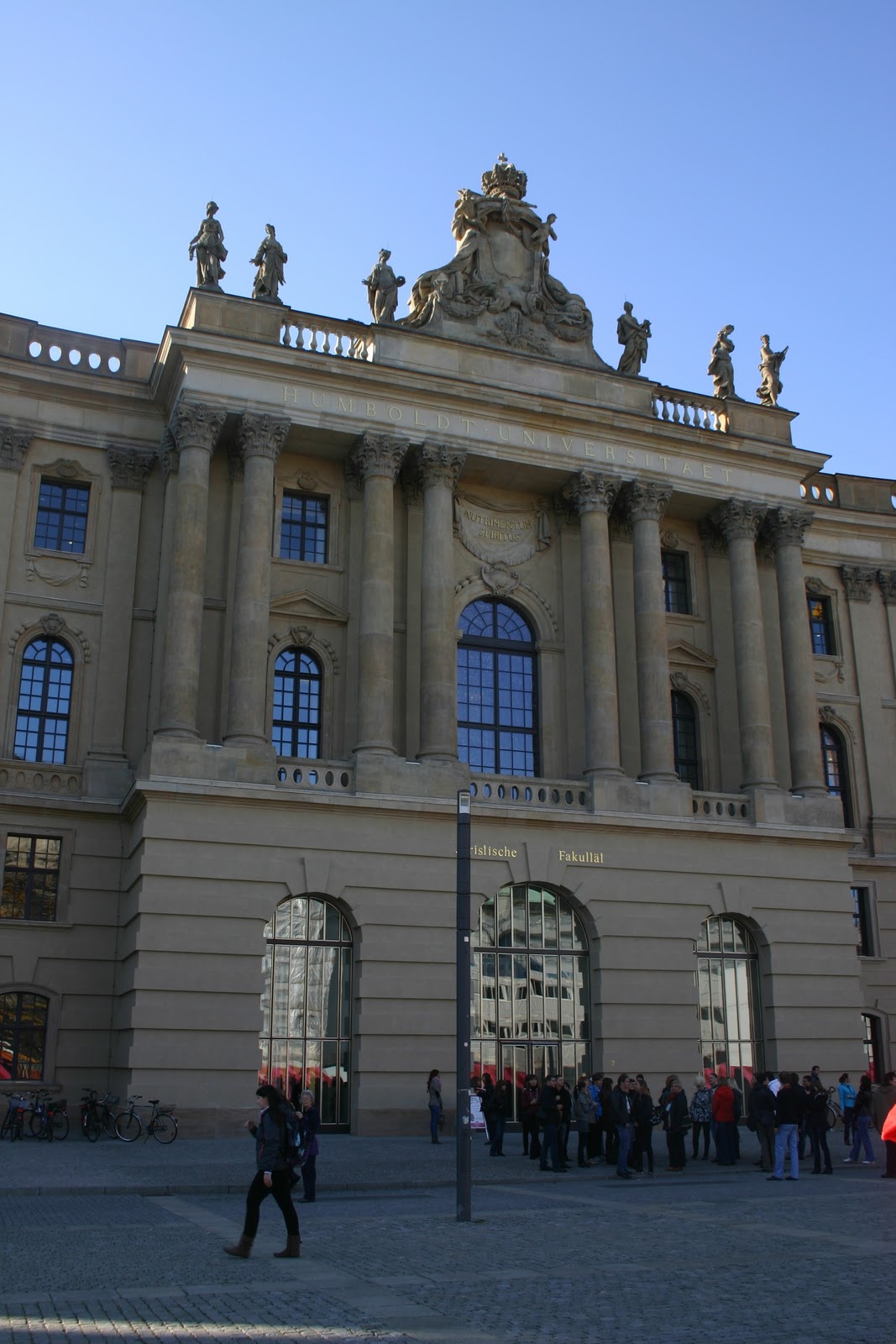
On our last day in Berlin, Santos and I decided to retrace our steps and revisit all the places that we had wanted to get a closer look at/take more photos of.  We started off at the Brandenburg Gate, then followed the same route that we took with our tour guide.  I think this is a really good way to get to know a city in a short time period and on a bidget - do a free walking tour one, then revisit on your time so that you are able to wander and drink in the sites.


 All the round holes are filled in bullet holes
 
 The Reichstag

Wandering through Tiergarten

Stopped in a cafe at the Sony Center at Potsdamer Platz for free wifi and apple strudel

Randomly bumped in Alana at Pariser Platz!!

We ended the day by heading out to the East Side Gallery, a massive stretch of the Berlin Wall which has been divided into sections.  Each section has been painted by an international or local artist, at the invitation of the government.  Here are a few of our favourites:


Love from Cass and Santos

Santos's Scraps

Just dropping in to say that we will update the blog to catch up to where we are now, but till then I'll just give you some travel scraps: Venice, gondolas, gelato, Rome, Trevi Fountain, unseemly amounts of pasta and pizza, and today a visit to the Colosseum.

Future adventures include the Vatican and a certain ancient Roman city that was completely buried and preserved under volcanic ash and pumice.

Till Cass's more detailed blog post, here are two photos from Venice.


Saturday, 29 October 2011

Berlin Part III: Sachsenhausen

Greetings!

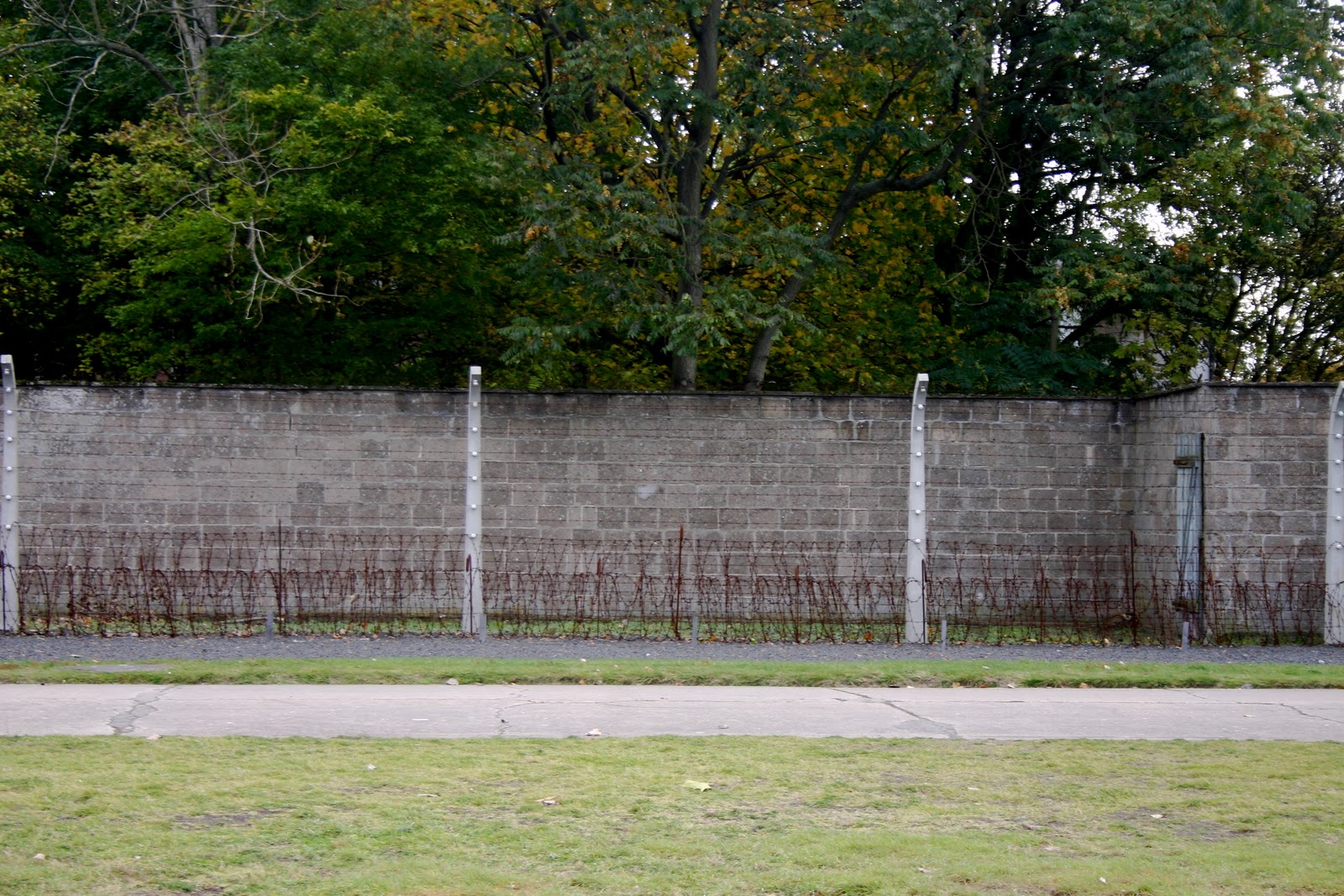
Sacsenhausen was a concentration camp that housed male dissidents, Jews, homosexuals and other 'undesirables' near Berlin during the Second World War.  It was also used for some time during the Cold War, though this was initially covered up by the East German government at the time.  Santos and decided to participate in a guided tour of the camp, to gain a better understanding of what the prisoners had to go through.

Life really was terrible for the poor men and boys (it was a male only camp) that were imprisoned at Sachsenhausen.  Our guide spoke at length of the conditions and torture at the camp, including one incident where the prisoners had to stand still in the main area for approximately 16 hours, despite the extreme cold and snow.  Many of the prisoners died that night and many more died in the following days as a result.  It is so hard to come to grips with the reality of what happened - it is one thing to read and learn about it at school and in books, another thing to see where it all took place and still another to fully realise it.  Even now, a small part of me still cannot comprehend that some human beings did such atrocities to other human beings.

I have to admit that it felt strange taking photos at Sachsenhausen.  Because of this, I didn't take too many and none inside any buildings, in the rooms where prisoners where were kept or in the crematorium.


 The green building was the officers' mess hall, and at times the prisoners were forced to wait upon the officers, giving them food while they were starving.  It was apparently known as 'the green monster'.

The building behind the trees was the home of the camp warden.  The grounds surrounding his house were beautiful, with ponds and trees, and swan and other animals.

Front view of the watchtower that guarded the entrance to the prisoner section of the camp.


View from the gate.  This was the main area where the prisoners had to attend rollcall twice and day and where the majority of the punishments took place.  The large obelisk in the background is a monument constructed by the communists.


 The watchtower.  The balcony at the top house a huge gun on a pivot that was continually manned.


 Monument construcyed by the Communist government in memory of those freed from the camp.  Apparently the statue design (a communist soldier, a communist worker and a freed prisoner) had to be reworked as the prisoner was too authentic - the government wanted a healthy looking prisoner instead of an emaciated one, to show that the communists were survivors.


This building housed the doctor's office and morgue, where autopsies took place.  The family of prisoners who died at the camp could pay a fee at receive the ashes of their family member as well as a death certificate with cause of death.  However, due to the nature of the crematorium, there was no way of knowing which ashes belonged to who (or any way of separating them).  In addition, the doctor only autopsied those prisoners he had a vested interest - those with abnormalities or those he had deliberately infected with disease and then experimented.  All others were carried by other inmates, who were extremely inexperienced and who were forced to pick one of seven causes of death, including heart attack, stroke, cancer, etc.  Death due to starvation, gunshot, overwork, hypothermia or being thrown onto a barbed wire fence were not options.

Sorry this wasn't the happiest of posts, but we felt it was important to see this part of history as well.  Our next post (which I will write tomorrow night) will be much happier, I promise!

Love from Cass and Santos

Berlin Part II: Cold War-Style

For our second tour of Berlin, Santos and I elected to take a tour run by Insiders Tours, called 'Cold War Berlin: Soviet Secrets, CIA Spies and More'.  From the website: "Get an extraordinary insight into: what it meant to live in the eastern bloc's most Stalinistic State – the former GDR; successful and failed escapes where Border Command sooner followed the orders of 'shoot to kill' than allow the heinous crime of 'flight from the Republic'; how MI6 and the CIA tunneled under the Wall and Soviet Zone and tapped into the Red Army's secret communications; the methods used by the Stasi to guarantee control of east Germany's population, from 'radiation tags' to "Day X" preparations."  I have to admit that I was a little bit disappointed by this tour, especially as it was a paid one.  Barnaby, our tour guide, was extremely informative and we learned quite a bit about what life was like in East Berlin and Germany, plus about the Berlin Wall and several successful and unsuccessful escape attempts.  However, the tour was quite light on information about spies and the Stasi, which are the hooks that drew me in.  Despite this, it was still quite good.


 It had to be done.  Classic photo of me trying to climb the wall.  Barnaby (the tour guide) looked at me like I was crazy.

 Preserved section of the death strip, with a recreated watchtower.


 Checkpoint Charlie!  John, this pic is for you.  This area is a nightmare - so many tourists, so little sidewalk.  Several of the guides referred to it as 'Berlin's Disneyland'.

After the tour, Santos and I headed down to the Topographie des Terrors, an exhibition that recounts many of the horrors of the two World Wars and the Cold War, including personal accounts.  Very very sad.  Santos and I still find it so surreal that these events (especially the Cold War) didn't happen very long ago at all.

Sorry that there weren't too many photos from this day!  Next few posts should hopefully make up for it.

Love Cass and Santos

Friday, 28 October 2011

Berlin Part I

On our second day in Berlin we decided to take a free tour with New Berlin Tours.  This is a walking tour of about 3.5 - 4 hours around several of Berlin's main attractions.  If you like the tour, then you can tip your guide at the end and buy tickets to any of New Berlin's other tours.  The tour that we went was great - Sadie, our guide, knew a lot about Berlin's history and was also quite entertaining.  She spoke mostly about the two World Wars and the Berlin Wall, but also gave some information about the 'birth' of Germany as a country.  If you ever head to Berlin, it is definitely worth considering.  Plus, it's free!

The Jewish Memorial

The memorial is amazing.  It is surreal, eerie and powerful.  You can't really tell from these pics, but the blocks are all different sizes and shapes.  Some are level with ground, others tower above you.  Others either narrow /  \ or widen \ _/  at the top, adding to the sense of confusion. The ground itself also changes, going up and down like a series of small waves.  It would be so easy to just wander through the memorial for ages - even the sound of traffic and people shouting and talking and laughing is dampened when you are amongst the blocks.


Ministry of Finance

This is a mural by the Communists to show how awesome Communism is and how happy everyone is under communism.  Opposite on the ground is a huge photo (same size as the mural) of a protest against communism that turned extremely violent.

The Berlin Wall


Pariser Platz
Church

Opera House
Opera House again

Book Burning Memorial
The book burning memorial is a window to an underground storeroom that is filled with empty bookshelves, showing in a visual way the huge void left by the book burnings.

Museuminsel (Museum Island)

Berlin Dome


The Berlin Dome was amazingly beautiful - from the outside, the inside and the view from the top.